by Edward Hudgins
April 1 marks the 50th anniversary of the 1976 founding of Apple by Steve Jobs and Steve Wozniak. We’ll rightly hear praise for the revolution they’ve wrought with personal computers, iPods, iTunes, iPhones, iPads, Apple Stores, and much more. The world now is defined and shaped by these technologies from Apple as well as from its competitors. Jobs famously sought to make a “dent in the universe,†and he succeeded perhaps beyond even his ambitious expectations.
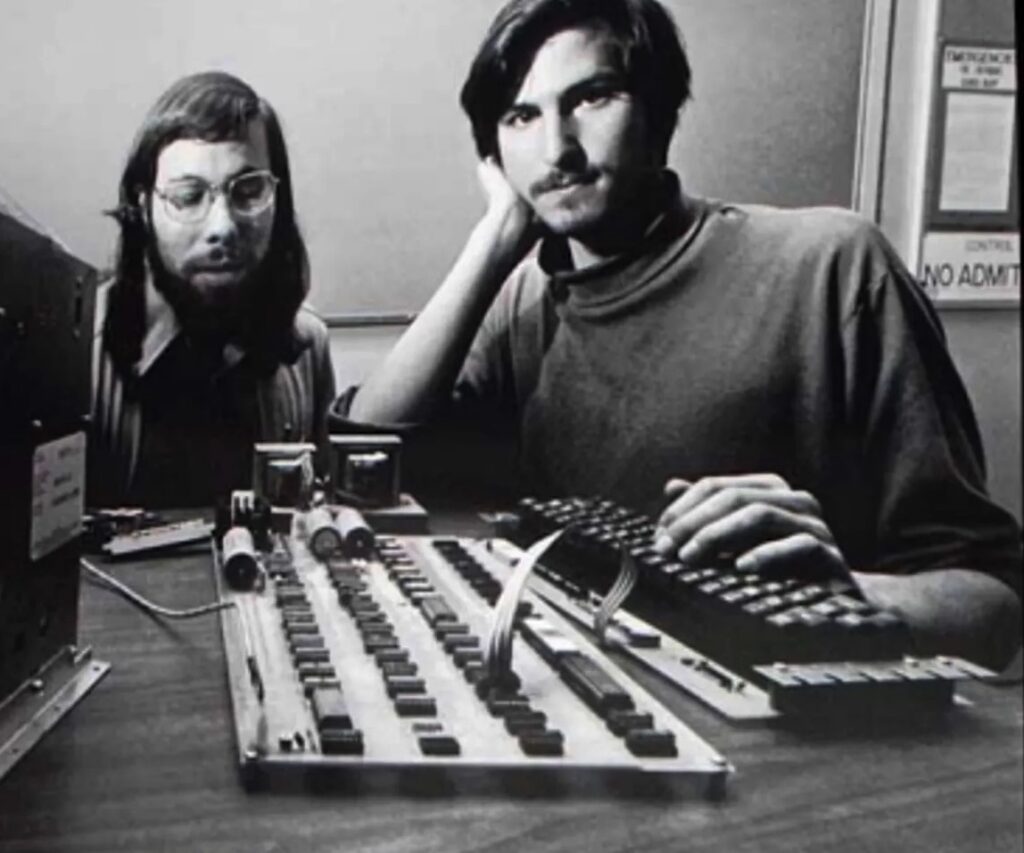
But this anniversary should also enlighten us to the factors that allowed the Steves to succeed, which we need to strengthen or restore if other innovators are to join Apple in even more profound transformations of our world.
From garages.
Apple was famously started in Jobs’ parents’ garage—and the rest of the house!—which itself exemplifies something very American. In 1939, Bill Hewlett and Dave Packard started the enterprise that bears their names in a place normally reserved for parking their cars. In 1998, Larry Page and Sergey Brin rented a garage when they set up Google. Jobs and Woz were regulars at the Home Brew Computer Club, a hobbyist group of hardware and software aficionados, started in 1975 by Gordon French in—you guessed it!—his garage. It was there that Woz first showed off the Apple 1 computer.
The point is that these innovators were optimistic visionaries so fired up with creating a product or service that they just went at it, in the most convenient space available, never mind licenses or government regulation and mandates. They loved their work.
Optimism and definite purpose.
Let’s understand the culture in which Jobs and Woz flourished. In his book Zero to One, Peter Thiel, who co-founded PayPal with Elon Musk and was an angel investor in Facebook, argues that until recently, America’s culture was characterized by definite optimism. As optimists, we expected that the future would be better than the past if we just worked to make it so. Therefore, innovators and entrepreneurs made it with definite projects from an Empire State Building even during the Depression, to personal computers, and to AI today.
By contrast, Thiel suggests that Western Europe is characterized by indefinite pessimism. A century of World Wars sapped the continent’s Enlightenment optimism. Thiel maintains that Europe has “succumbed to undirected bureaucratic drift†and “Europeans just react to events … and hope things don’t get worse.†Indeed, while American and Chinese companies compete to be tops in Artificial Intelligence, fearful Eurocrats add regulations and penalties on innovation. Euro “techlash†against Apple, Alphabet and Meta explains why Apple’s market cap is nearly $4 trillion, up from $350 billion when Tim Cook took over in 2011, while the top European companies have at best 10-20 percent of that value.
The Euro-virus in America.
Apple has had its failures. It discontinued a planned Apple car after 10 years and a $10 billion investment. And it’s trying to catch up in AI against fierce competitors like Nvidia.
One of Apple’s greatest values that keeps the customers coming is its closed eco-system. Devices, software, and services are integrated, benefiting those in that “walled garden,†vs. those who choose only this or that Apple component. Of course, Apple iOS faces competition from open Windows, and iPhones compete against Android devices.
Yet in 2024, the Antitrust Division of the U.S. Justice Department filed a case against Apple, accusing it of monopoly practices, in essence spreading the techlash Euro-virus to cripple techno-American progress.
And this attack can literally endanger your life. Tim Cook declares that Apple’s “greatest contribution to mankind†will be about health. Apple hired Stanford University’s accomplished Dr. Sumbul Desai as vice president for health innovation. With its Watch, Air Pods, upcoming Glasses, Rings, and other integrated devices and services, it could track in real-time the health of each individual in its eco-system and monitor with AIs each individual’s bio-condition. Doctor visits could be rare since AI doctors never sleep. This could allow medical challenges to be detected and treated before they become serious, transforming our “sickcare†system into a system ensuring healthspan and longevity.
Liberating innovators.
The more Apple and other innovators need to devote resources to fighting government innovation killers, the fewer innovations we will see. In the healthcare case, millions would suffer and die needlessly without recognizing the needlessness of their travails.
Apple’s 50th anniversary should raise consciousness about benefits we often take for granted. Jobs introduced the first modern smartphone in 2007. Today, over 90 percent of Americans have such devices that are many times more sophisticated than the originals. According to Applied Materials CTO Omkaram Nalamasu, if we were still living in the 1980s and wanted to build a device with all the capacities of today’s smartphones, it would cost about $110 million, and the device would be 14 meters tall.
So let’s celebrate Jobs, Woz, Cook, and the thousands of achievers who have made our world. And let’s put a dent in the universe, overcoming polarization and pessimism with techno-optimism!
Edward Hudgins, Ph.D., is founder of the Human Achievement Alliance and an expert on technology and public policy.
